Robotic Tank Inspection
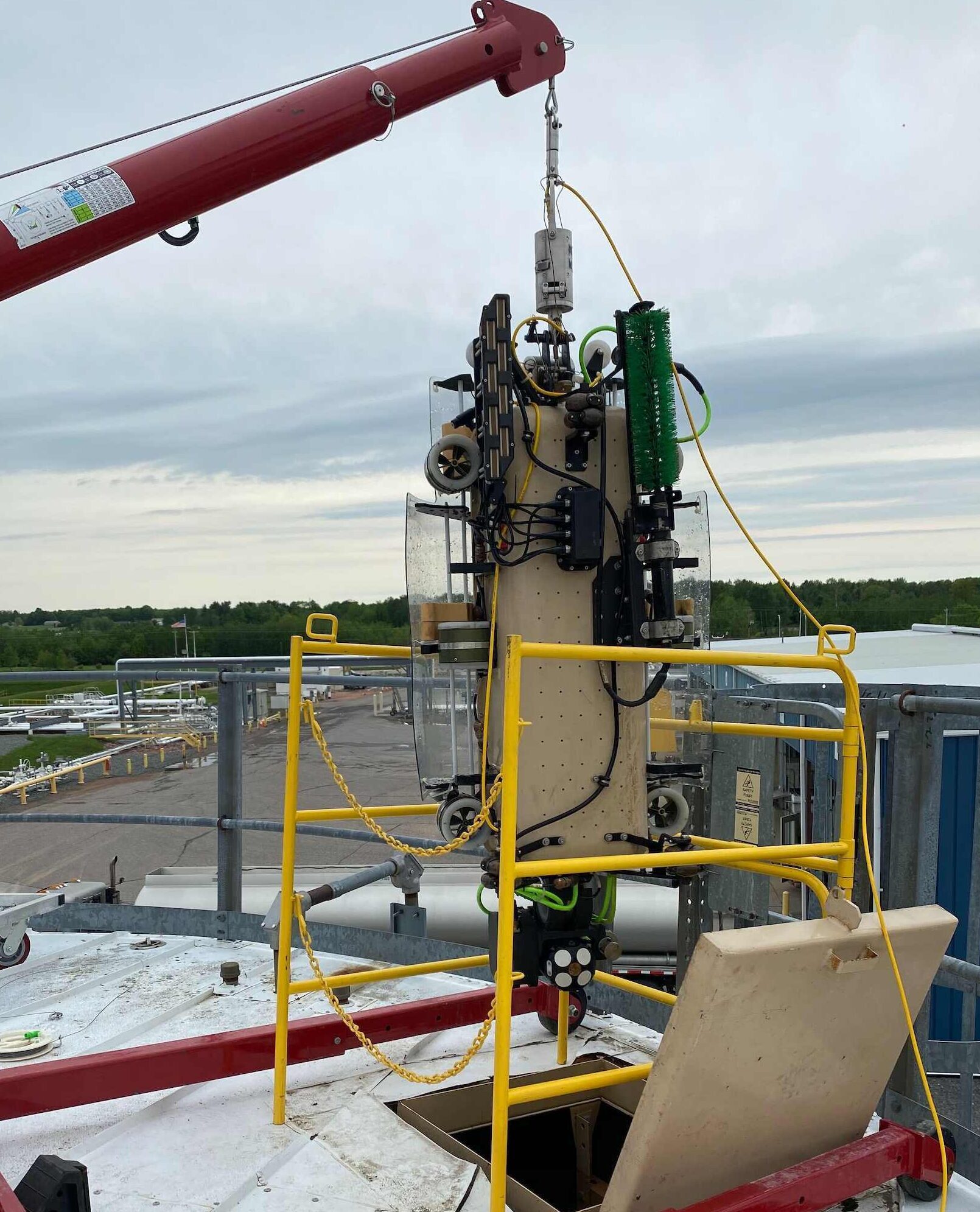
A robotic tank inspection system is used to safely inspect storage tanks without requiring personnel to enter confined spaces.
The robot can detect corrosion, cracks, leakage, dents, and structural damage using cameras and sensors.
It helps reduce inspection time, improve safety, and provide accurate inspection data for maintenance planning.
The system can be designed for remote operation and real-time monitoring.
Robotic Tank Inspection
Equipment Specifications
MAGBOT Tank Crawler is a magnetic robotic system designed for inspection of steel storage tanks and other ferromagnetic surfaces.
It uses magnetic adhesion to move securely across vertical and curved surfaces while carrying cameras and NDT sensors.
The crawler enables safe, remote, and efficient inspection for corrosion, coating damage, weld defects, and wall-thickness loss.
Test Standards
- API 653: The primary governing standard code for the inspection, repair, alteration, and reconstruction of above ground storage tanks
Robotic Pressure Vessel Inspection
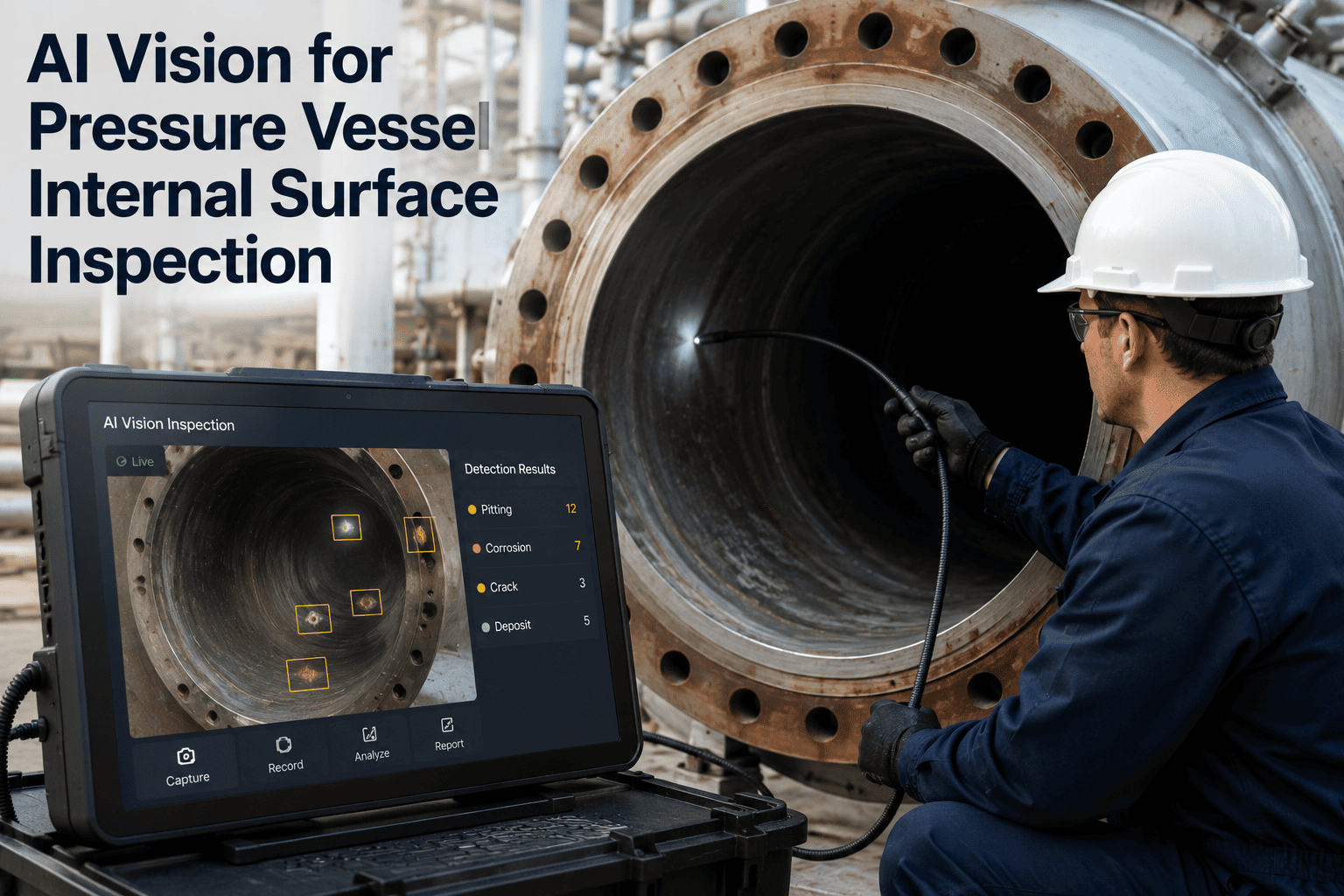
A robotic pressure vessel inspection system is used to inspect vessels safely without extensive human entry into hazardous or confined areas.
The robot can detect corrosion, cracks, weld defects, dents, and material thinning using cameras and NDT sensors.
It improves inspection accuracy while reducing personnel exposure to high-risk environments.
The collected data can be used to assess vessel integrity and plan maintenance or repairs.
Robotic Pressure Vessel Inspection
Equipment Specifications
A robotic magnetic crawler uses permanent magnets or magnetic wheels to move securely over ferromagnetic surfaces.
It can carry cameras and NDT sensors for inspecting tanks, pressure vessels, pipelines, and steel structures.
It enables remote inspection of vertical and curved surfaces while improving operator safety and inspection efficiency.
Test Standards
- API 510: To ensure the safe operation, maintenance, and repair of in-service pressure vessels
Robotic Boiler Tube Inspection
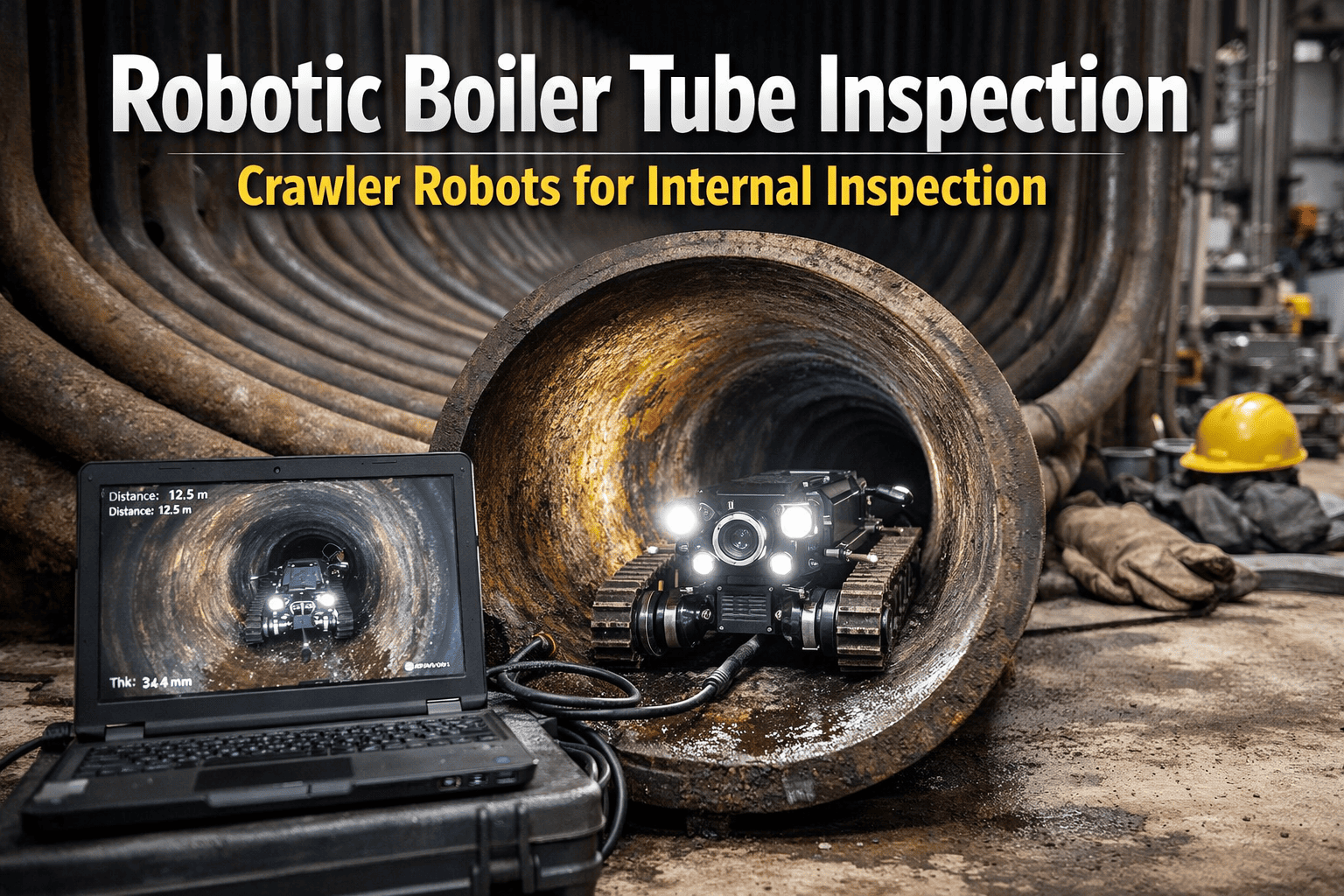
A robotic boiler tube inspection system is designed to inspect boiler tubes for corrosion, erosion, cracks, deposits, and wall-thickness loss.
The robot uses cameras and NDT sensors to examine the internal or external condition of tubes.
It can access difficult and hazardous areas, reducing the need for manual inspection.
The collected inspection data helps identify defects early and supports preventive maintenance.
Robotic Boiler Tube Inspection
Equipment Specifications
MAGBOT-B is a magnetic robotic inspection system designed to move on ferromagnetic surfaces such as boiler components and steel structures.
It uses magnetic adhesion to maintain secure contact while carrying inspection cameras and NDT sensors.
The system enables remote, efficient, and safer inspection of difficult-to-access surfaces.
Test Standards
- ASME BPVC Section V: The core framework detailing how ultrasonic, electromagnetic, and visual tests must be executed
Pipeline Internal Visual & UT Inspection
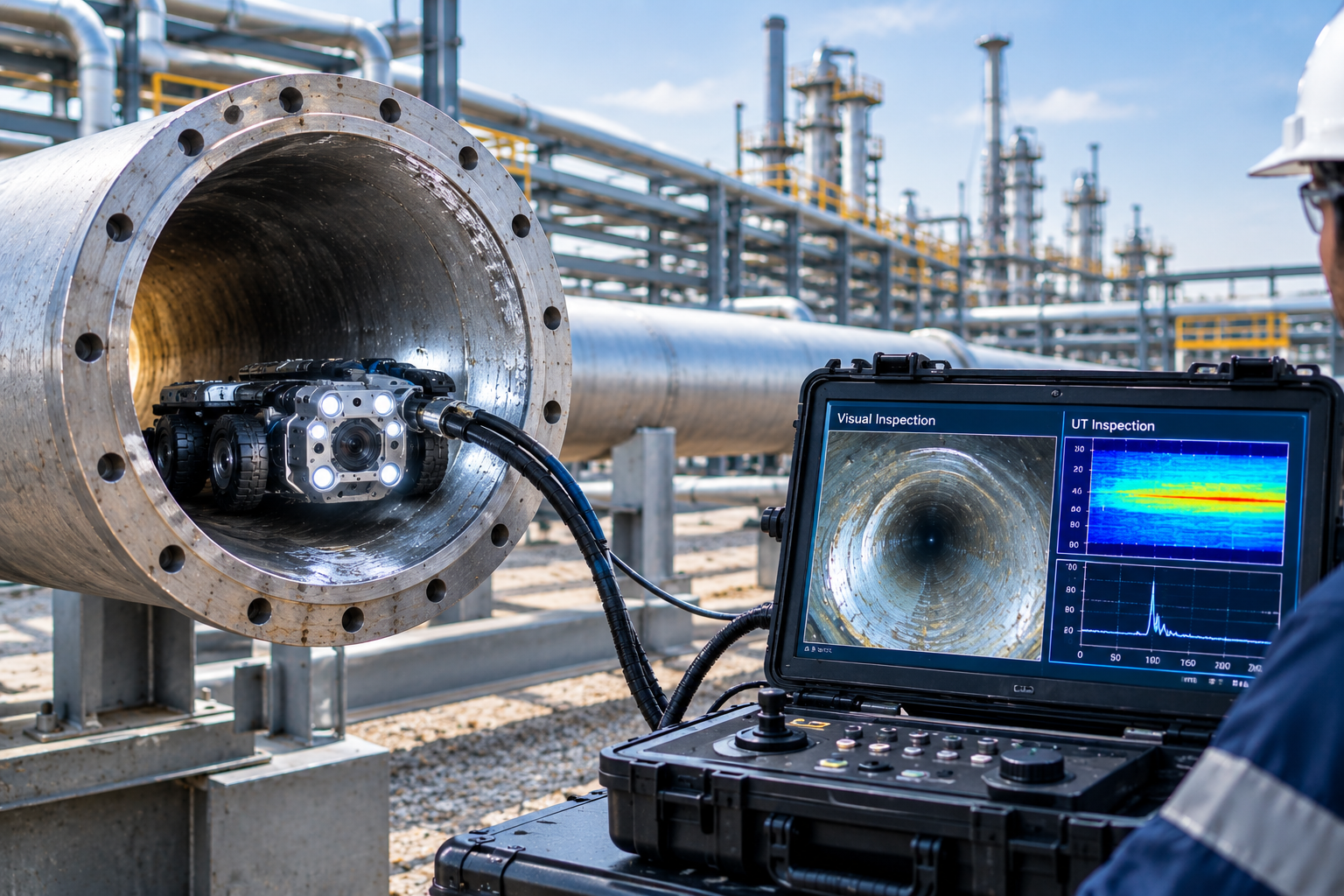
Pipeline Internal Visual & UT Inspection is carried out using robotic inspection systems to assess the internal condition of pipelines without extensive manual intervention.
High-resolution cameras provide visual inspection for corrosion, cracks, dents, deposits, weld defects, and internal damage.
Ultrasonic Testing (UT) sensors measure pipe-wall thickness and detect material loss or defects with high accuracy.
The inspection data is recorded and analyzed to evaluate pipeline integrity and identify areas requiring maintenance or repair.
Pipeline Internal Visual & UT Inspection
Equipment Specifications
- Camera Resolution: High-definition 1080p to 4K or 2-Megapixel digital pan-tilt-zoom (PTZ) heads.
- Rotation & Field of View: 360° continuous horizontal pan and 180° vertical tilt to eliminate blind spots.
- Illumination: High-intensity adjustable array LEDs (minimum 500 to 1,000 lux compliance based on ISO 17637 standards).
Test Standards
- API 570: The American Petroleum Institute's authorized inspection standard covering the in-service inspection, repair, alteration, and rerating of metallic and fiberglass-reinforced plastic (FRP) piping systems
- ASME Section V Article 4: The governing standard for the Ultrasonic Examination (UT) of Welds in pressure vessels, piping, and structural components